Partager


Can a non-profit use digital tools to provide a rapid response to its beneficiaries during a crisis?
In July 2026, a heatwave hit France. To guide the most vulnerable people toward cool spaces, the non-profit Solinum implemented an emergency plan, written in a single morning, and tested an AI voice agent that made nearly 2,800 calls to find out which locations could accommodate them. Everything was made accessible on the platform canicule.soliguide.fr.
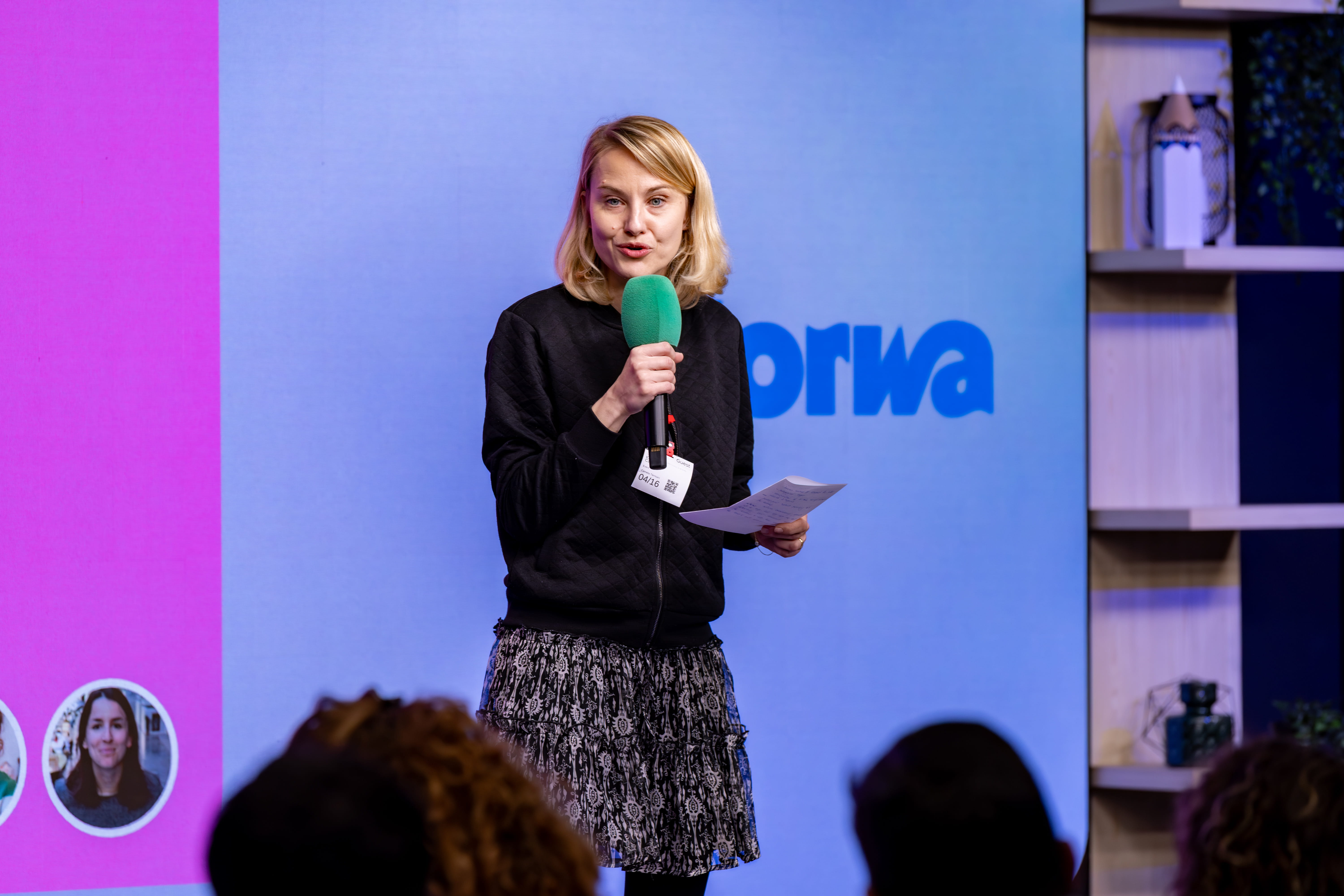
We spoke with Victoria Mandefield, CEO of Solinum, to learn more about this project, how it went, and what other non-profits can take away from it.
Where can people go to cool off?
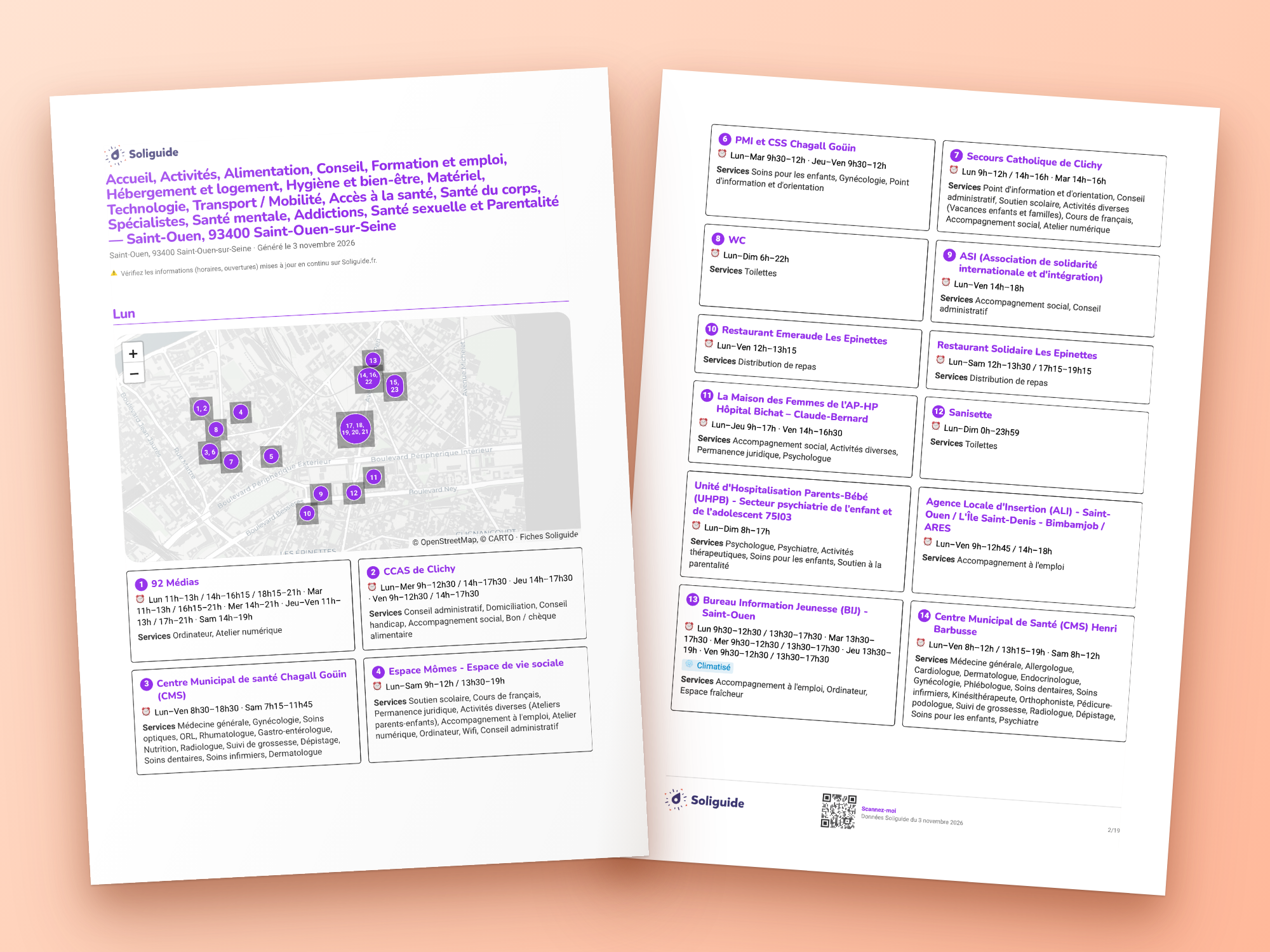
Solinum develops Soliguide, an online directory of resources for people experiencing homelessness or precarious situations: food distribution, showers, day centers, and more. It also exists in a paper version: printable lists by region for those without access to the app. Until recently, the Soliguide team produced these themselves upon request.
With the heat, a question became urgent for those working in social services: where should people be directed to cool off? At the start of the heatwave, Soliguide didn't have the answer: a location's profile indicated neither whether it was air-conditioned nor if its hours changed during a heatwave. The question had simply never been asked.
The need was clear: verify the information for thousands of establishments... as quickly as possible, and with a small team.
A rapid-response plan
First step: Soliguide added a "cool spaces" service. An "air conditioning" filter allows users to quickly find equipped locations, and the mobile app displays air-conditioned spots, showers, and water fountains right on the home screen.
The challenge remained: knowing which places were truly air-conditioned. To achieve this, the team used several methods: standard update calls, emails and texts linking to a page for a yes/no response, data sent by cities, and facilities updating themselves. And a voice agent.
For this, the team drew inspiration from the Baguette Index, a site that compares the price of a baguette in French towns by calling bakeries using a voice agent. Based on the same principle, Solinum created Cléo with ElevenLabs, a platform specializing in voice synthesis, which provided the non-profit with free credits. Cléo calls libraries and day centers to ask if the facility is air-conditioned.
The result, across all channels: in sixteen days (from July 1st to 17th), 3,000 locations were verified for air conditioning. Cléo contributed to this with nearly 2,800 calls in ten days, targeting libraries and day centers.
Using AI for rapid customization and deployment
The team also uses AI to write to town halls, government departments, and network leads to introduce them to Soliguide. In practical terms, AI helps enrich and re-qualify the contact database and personalize emails in record time. The numbers speak for themselves: an initial, identical email sent to everyone achieved a 2.6% click-through rate. The second, sent two days before the announced heatwave, reached 32%: three different emails depending on the recipient, a single link to their local list, a concrete subject line, and a signature with a real first name.
Solinum also uses AI to create a site in just a few hours that automatically generates paper lists. A town hall or an organization can select its area, print a list of air-conditioned locations nearby, and provide it to homeless individuals. For them, paper is often more practical than a phone.
Nearly 300 lists were printed by professionals in six weeks. A long-held intuition of the organization has been confirmed: with a simple tool, field workers can create these lists themselves. And the information is in demand: the pages for air-conditioned locations were viewed twice as much as the average Soliguide page this summer, and 34% more than the previous summer.

What works, and what doesn't
"The time saved is significant, and that makes all the difference in a crisis situation," says Victoria Mandefield. Cléo understands the responses well. Every evening, two team members review the call transcripts to verify them.
One unknown remains: how will people react to an AI on the other end of the line?
The team is testing several approaches. When Cléo announces it is an AI in the very first sentence, most people hang up. When the announcement comes after a few exchanges, the conversation continues. Many are not surprised: for Victoria, talking to an AI is gradually becoming normalized. Some respond to Cléo as they would a person, others as they would a voicemail system.
The tool also has its limits. It handles short, clear answers well. As soon as the exchange gets longer, it loops, risking frustration for the organization's partners. It is suitable for simple questions, not complex updates.
Some reactions are more encouraging than expected. The team initially prioritized libraries, which are used to being solicited, as they thought day centers would be less willing to respond to a voice agent. When called later, however, they responded just as well.
What other organizations can learn from this
If Solinum was able to act quickly, it wasn't just thanks to AI. Three lessons emerge from this project that are useful for any organization, with or without AI.
Clean data facilitates future projects
The organization didn't start from scratch: digital technology is at the heart of its mission. Its database was already well-structured, and the team had access to Solikit, its AI prototyping environment, which allowed them to launch a site in just a few hours.
You don't need to be tech-focused to be inspired by this: an organization that documents and centralizes its information using good tools will save time on all its future projects.
Don't assume how others will react; always test
Solinum thought day centers would react poorly. That wasn't the case. And many people responded to the AI without surprise. Whether partners or the public: it is better to test than to guess.
Choose the tool based on the need
Solinum's need is specific: knowing which locations are air-conditioned. To address this, they used one tool per task: a voice agent to ask a simple question during nearly 2,800 calls, and a site for everyone to create their own paper list. An approach that is easy to replicate: break your need down into small tasks and keep AI for those where it truly helps, with human oversight.
A question that remains open
Victoria Mandefield raises a moral dilemma: using AI to address a consequence of climate change, when AI itself is partly responsible for it.
The non-profits we support at Share it often ask us this question, and there is no simple answer: these tools consume energy, and the tension with the values of the social and solidarity economy is real.
But in the case of Solinum, we find the usage relevant: it addresses a clear need, is limited to a specific task, and the team reviews the results. For every project, the question remains the same: is the need real, and is AI truly useful in addressing it?
As Nicole Trigodet from OpenClassrooms reminded us during a conference we mentioned in this article : "AI amplifies our actions; it does not decide what we should do."
Victoria Mandefield also sees a reason for hope: those working in the solidarity sector are mobilizing, coordinating, and demonstrating their ability to anticipate. "We are collectively becoming better at crisis management," she summarizes.
Sources of inspiration:
- Interview with Victoria Mandefield, CEO of Solinum
- Solinum 2026 heatwave report: solinum.org/bilan-canicule-2026
- Soliguide heatwave plan website: canicule.soliguide.fr
- Soliguide Wiki: wiki.soliguide.fr
- Baguette Index: lebaguetteindex.fr
- Article by Nicole Trigodet: Share it